- FR

 S’inscrire
-
- Ventes Classiques
- Online Only
- Ventes passées
- Acheter
- Vendre
- Plus
- Galerie
- Commerce d'art
- Maison d'Édition
- Kornfeld aujourd’hui
- L'histoire de la Maison
- Informations
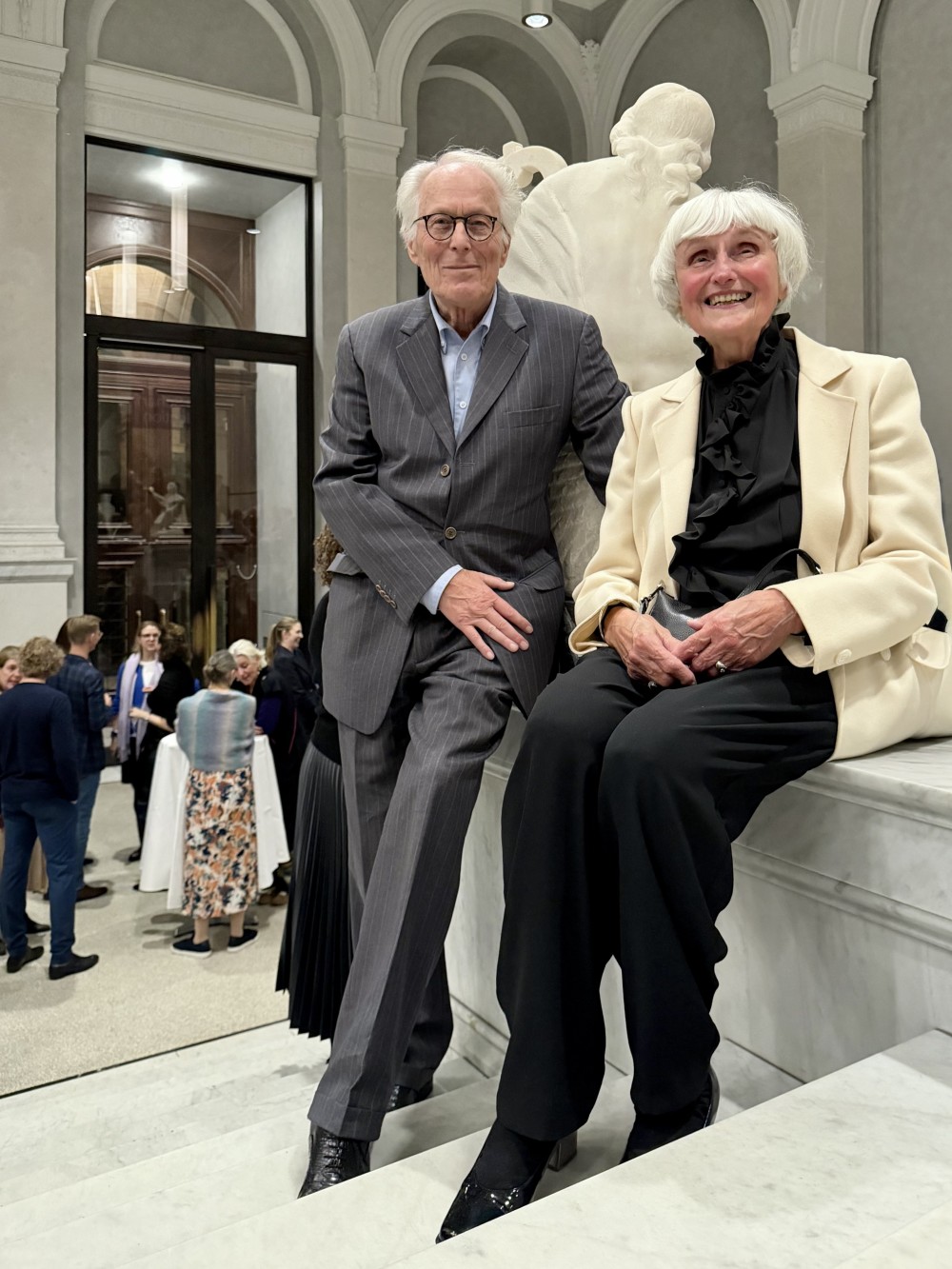
For decades, Gudrun and Martin Fritsch have devoted themselves with extraordinary enthusiasm to researching, collecting and promoting the work of Käthe Kollwitz. Their immense commitment has been crucial in making the life and work of the Berlin-based artist accessible to a wide audience. What began as a private passion for collecting grew into an exceptional life’s work that has had an impact far beyond Berlin.
Gudrun Fritsch (née Heinze) was born in Berlin. Before studying special educational needs and clinical psychology, she studied history, German language and education. She received a Fulbright scholarship to study in the USA, completing her PhD in 1978. She then took up various roles in research and teaching, as well as at the Federal Ministry of Education and Science, before returning to Berlin to work as a school psychologist. During this time, she also immersed herself intensely in art history, completing her Master degree at the Humboldt University with a dissertation on the subject of ‘Käthe Kollwitz and Russia’.
Martin Fritsch was also born in Berlin and has a degree in economics. He held managerial positions at AEG and Siemens. Later, he turned to the art trade, working closely with the Berlin-based artist, art dealer and collector Hans Pels-Leusden. He also collaborated with the auction house Villa Grisebach.
In 1986, Gudrun and Martin Fritsch founded the Käthe Kollwitz Museum in Berlin together with Hans Pels-Leusden, creating a space entirely dedicated to the artist’s work. While Martin Fritsch managed the museum as the director for many years, Gudrun Fritsch focused on the academic side, working as curator, author and chairwoman of the Friends of the Museum Association. Thanks to numerous exhibitions, publications and international collaborations, the museum has become one of the leading institutions for the study and presentation of Käthe Kollwitz’ work.
The Fritsch couple’s shared enthusiasm for Käthe Kollwitz, their personal contact to the artist’s descendants and the numerous works they acquired on the international art market and at auctions – often at the Kornfeld auction house in Bern – formed the basis of one of the most important private collections of Kollwitz’ works. Not only does the Fritsch collection reflect an extraordinary connoisseurship, but it also an eloquent statement to a profoundly personal connection to the artist and her humanist ideals. In recognition of their long-standing achievements, Gudrun and Martin Fritsch were awarded the Federal Cross of Merit on Ribbon in 2006 and the Citizens’ Medal of the Charlottenburg-Wilmersdorf district of Berlin in 2011.
As recently as two years ago, a new print was added to the collection (lot 923). However, this was also the moment when Gudrun and Martin Fritsch became increasingly convinced that it was time to find new homes for their works. They wish for their works to continue to inspire people and disseminate Käthe Kollwitz’ artistic power also in the future.
The collectors’ connection to the Kornfeld auction house has grown over many years. Many works were acquired in Bern, thanks to the close relationship with Eberhard W. Kornfeld and his company. In fact, it was Ebi Kornfeld who encouraged Gudrun and Martin Fritsch to focus on self-portraits. We are therefore especially delighted and grateful to be able to present this unique collection, with its many self-portraits, in a special catalogue. The collection is not only a significant chapter in the reception of Kollwitz’ work, but also an impressive legacy of two individuals who dedicated their lives to one of the greatest female artists of the 20th century.
Online Kataloge
Anita Beloubek-Hammer
Käthe Kollwitz (1867–1945) is Germany’s most famous female artist. Streets, squares and schools throughout Germany are named after her. Today, key themes of her committed work are more relevant than ever. From the outset of her career, Kollwitz, who was primarily a draughtswoman and printmaker but later also produced sculptures, focused exclusively on people and the human condition between birth and death – landscapes or still lifes are nowhere to be found in her entire body of work. Although she and her extraordinary oeuvre with its specific subject matter may seem singular to us amidst the contemporary phalanx of her male artist peers, her work is nevertheless deeply rooted in the intellectual and social conditions of her time, spanning from the late 19th to the mid-20th century.
Kollwitz’ passionate dedication to portraying human beings with all their emotions, ranging from joy to sorrow, happiness and despair, grief and loneliness, but also deep intimacy, particularly of mother and child, stemmed, on the one hand, from her socially conscious upbringing. However, it was also a reaction to the intellectual and social ills and shortcomings of the Wilhelmine Empire. Friedrich Nietzsche had already criticised with particular severity what he perceived as a lack of culture and authentic life during the so called ‘Gründerzeit’ period. Following in his footsteps, a series of intellectual movements came into being around 1900 that opposed the perceived dominance of materialism and rationalism, instead emphasising notions such as ‘life’ and ‘empathy’. The most influential of these movements, with quite opposing views, were the French philosophy of life, established by Henri Bergson and represented in Germany by Georg Simmel and Wilhelm Dilthey; its antithesis, Neo-Kantianism (with Leonard Nelson among others); and anthroposophy, founded by Rudolf Steiner. Käthe Kollwitz was acquainted with all the aforementioned personalities or was familiar with their ideas.
On the occasion of her exhibition marking her 50th birthday at the Kunstsalon Cassirer in Berlin in 1917, Kollwitz took stock several times and explicitly stated her artistic aim:
‘All my work hides within it life itself, and it is with life that I contend through my work.’ In the sense of Nietzsche’s imperative of ‘Amor fati’ (love of fate) she, too, was concerned ‘to take life as it is and, unbroken by life – without complaining and overmuch weeping – to do one’s work powerfully. Not to deny oneself, the personality one happens to be, but to embody it. To make oneself better – I mean that now not in the Christian, but rather in the Nietzschean sense. “Mensch werde wesentlich!”’
The two focal points of her motivation that emerge from this statement are also reflected in the selection of her works from the Fritsch Collection featured in this auction: on the one hand, there are the numerous self-portraits, which express the artist’s self-critical stance, and, on the other, there is the powerful existential subject matter with its images of physical and mental distress, self-sacrifice and death. As in Kollwitz’ entire body of work, serious and rather dark tones prevail, which she herself poetically described as ‘the primordial sound of life’, a concept she admired in her favourite poet, Goethe.
Among the first works acquired by the collector couple Fritsch around 1980 were iconic pieces with deeply emotional content. One example is the chalk drawing ‘Schlachtfeld’ (Battlefield, lot 913) from 1907, which depicts a mother bending down in the darkness with a lamp in her hand, hoping to find her son on the battlefield among those killed in the fighting. It is a preliminary sketch for the etching of the same name from the ‘Bauernkrieg’ cycle (Peasants’ War cycle, 1902/03–1908), in which Kollwitz seems to have anticipated the tragedy of her own life. The second early acquisition, entitled ‘Tod und Jüngling, aufschwebend’ (Death and the Youth, Soaring; lot 918), dates from 1922/23 and depicts a pair of figures soaring almost immaterially, united as a single form – a commemorating homage to her son who was killed in the First World War. The elongated limbs may be a reference to Michelangelo Buonarroti’s incomplete and dematerialised marble sculpture ‘Pietà Rondanini’ (see ill.), a photograph of which hung in her son’s room. His early death as a soldier was the most devastating event in the life of Käthe Kollwitz, especially as she herself had supported his wish to volunteer for military service despite her husband’s objections. During the war she came to realise the gravity of her mistake: ‘Peter would still be living had it not been for this terrible betrayal. Peter and millions, many millions of other boys. All betrayed.’ To serve as a memorial and warning to the misguided young victims, she created the haunting drawing of ‘Volunteers’ enthusiastically storming ahead into war (‘Die Freiwilligen’, lot 920), which she included, executed as a woodcut (lot 921), in her extraordinary ‘War’ cycle as a pacifist message. In her brush drawing ‘Die Überlebenden’ (The Survivors; lot 922), she captured the profound sorrow of those left behind – the desperate mothers and widows, the fathers paralysed by grief. It is one of the studies for a lithographic poster created for Anti-War Day on 21 September 1923, commissioned by the International Trade Union Confederation in Amsterdam.
Inflation and famine characterised the first post-war years. Kollwitz reacted to this with her three-part woodcut series ‘Proletariat’ (1924/25), amongst others. Sheet 2, entitled ‘Hunger’, featuring nine revisions, including different states and versions that were reworked with ink and opaque white, as well as partial prints, is part of the collection offered in this auction (lots 926 and 927). It depicts fleeing mothers and their children, ducking under the whip of the allegorical death of starvation. The reworkings give the sheets the character of unique pieces, while also providing insight into the artist’s creative process.
Käthe Kollwitz, a mother herself since 1891, increasingly and more intensely turned towards the subject matter of ‘Mother and Child in Distress’, creating touching drawings such as the three charcoal and chalk drawings from 1903 to 1910 – part of this auction – that address the subject of ‘Woman with Dead Child’. Just as in the Pietà, where Mary cradles the dead Christ, the distraught mother bends over the child’s lifeless body, clutching it with passionate devotion in her strong arms, unwilling to let go (lot 910). Depictions of children confronting death are strikingly numerous in the artist’s body of work. To her, this juxtaposition of extremes seemed particularly effective in expressing the ‘basic emotions of a full life’. She believed that ‘separation, death are concomitant conditions of every life’. Conveying this awareness was her aim right up until her own death.
One drawing from the collection is somewhat of an outlier with respect to Kollwitz’ range of subject matter (lot 908): ‘Aus vielen Wunden blutest du, o Volk’ (From Many Wounds You Bleed, O People, ca. 1896?). It is a detail study of the eponymous etching from 1896, which was originally intended to be the final sheet in the ‘Weaver’ cycle. The etching depicts a female nude tied to a stake. Its subject matter is the suffering of women, combined with the question of justice. However, the sheet was not used to close the ‘Weaver’ cycle, probably due to its singularly symbolist formal vocabulary. The drawing was once part of the Eberhard W. Kornfeld collection.
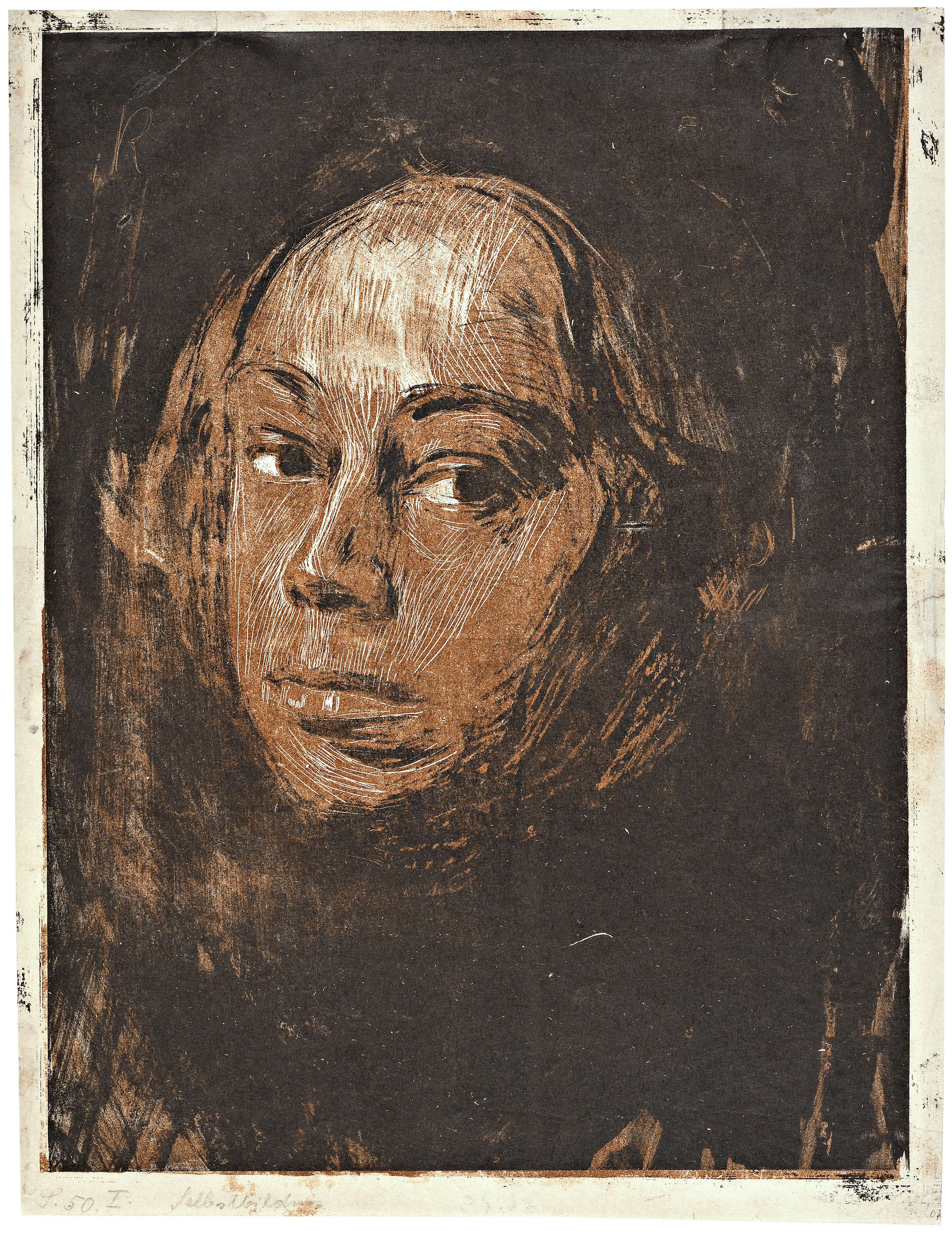
With a large number of self-portraits, Kollwitz ranks at the very forefront among her artistic contemporaries, who engaged with their own self-image with similar intensity. Van Gogh, Paula Modersohn-Becker, Lovis Corinth and Max Beckmann are equally as prominent in this regard. The Kollwitz catalogues raisonné document 103 direct self-portraits as drawings (out of a total of 1300 numbers) and about 35 in the form of prints (out of a total of 275 numbers). Additionally, both media contain numerous indirect self-portraits hidden within subjects of humanity in general such as motherhood, parting and death.
The auction offers ten self-portraits in the form of drawings and prints, produced between 1888 and 1936. These include exquisite studies and complete works of art, for example the two masterful and very rare colour lithographs (lots 914 and 915), which are among the collection’s greatest highlights. They were inspired by the artist’s encounter with the French graphic designer and painter Théophile-Alexandre Steinlen in Paris, where she stayed studying art in 1901 and 1904. It was during these visits that she began to consider using colour in her work.
In 1908, she began to write a diary, to which she confided her self-doubts she constantly struggled with, despite her early successes with her graphic cycles ‘Ein Weberaufstand’ (A Weavers’ Uprising, 1893–1893) and ‘Bauernkrieg’ (Peasant War, 1902/03–1908), despite the fact that her work had been acquired by the print departments in Dresden, Berlin and Munich, and despite having been awarded the Villa Romana Prize in 1907.
Some reflections of the 45-year-old Kollwitz, written on New Year’s Eve in 1912, as an artist, wife and mother, are illustrative of innumerable similar entries:
‘Was the last year good? It was peaceable. It brought me little sorrow. […] But the old problems are still there between Karl [her husband] and me. […] I deny it and refuse to acknowledge what is going on between Karl and me. At least not to Karl. I am being dishonest about this, and I think Karl believes that too.
My impression of Hans [the eldest son, born 1892] is that he does not always find in me what he seeks. He is moving forward swiftly and I am not. Does he feel that I am getting old? Am I perceptibly aging? I do not know. Sometimes I feel almost paralyzed, at other times buoyant. Sometimes I stop believing in the value of my working, and that is bad. Formerly I did not look to either side. Now I feel myself vulnerable; sometimes I am prey to despair. And I am too much upset by the young people with their different point of view [Expressionism]. […] feel as if I have been tossed into the scrapheap. And so I have. All that one can do is put on blinkers and plod along by oneself, paying no attention to anything else.’
At the same time, she was quite justified in stating with reference to her 1917 exhibition organised by Paul Cassirer: ‘All these prints are the distillation of my life. I have never done any work cold. […] I have always worked with my blood, so to speak. Those who see the things must feel that.’ Kollwitz shared this passion for the absolute with a whole generation of young artists, especially the Expressionists and other modernists, who followed the dictum of Friedrich Nietzsche’s prophet Zarathustra, ‘Write with blood’. It was the emotional and existential exceptional situation of the years before, during and after the First World War that resulted in a more radical formal language tending towards the abstract among numerous artists, particularly young ones. Kollwitz also came in closest contact with Expressionism in the post-war period. With their sparseness of form and reduction to the essential, the two self-portraits of 1924, a woodcut and a lithograph (lots 923 and 924), represent this development.
Kollwitz’s journey towards large-scale forms was encouraged by her sculptural work, which she soon intensified. In the final self-portrait presented in this auction (lot 929), from 1936, all detail has been eliminated. The poignant expression is created by her face alone, viewed from the front, with her shoulders bowed and her arms folded passively. It is a thoughtful portrayal of her old age, in which Kollwitz transformed her personal mental anguish into a universal allegory of loneliness. Since the beginning of the Nazi dictatorship, she had suffered many humiliations. In 1936 her sculptures were removed from a prestigious academic exhibition alongside works by Ernst Barlach and Wilhelm Lembruck. She hoped for a show of solidarity from her fellow artists, but in vain. ‘Such a silence all around us’, the almost 70-year-old Kollwitz wrote in her diary, ‘That too has to be experienced.’
In addition to its outstanding artistic merit and numerous iconic works it contains, the collection’s exquisite provenances must also be emphasised. The collectors maintained a friendly relationship with the artist’s grandchildren, which gave them access to their estate. A particular find was the estate of Otto Nagel, a fellow artist who was younger than Kollwitz but a good friend of hers. Nagel was the president of the Academy of Arts of the German Democratic Republic. In this role, he promoted Kollwitz’ work after the Second World War, initiating the compilation of the catalogue raisonné of drawings, first published in 1972, amongst other things. Added to this were notable German and international collections from the USA (lots 908, 915 and 1919), Canada (lot 906), Great Britain (lot 920), Switzerland (lot 908), Israel (lot 905) and Germany (lots 909 and 922).
Galerie Kornfeld has a long-standing tradition of engaging with Kollwitz’ work. Its predecessor, Galerie Gutekunst & Klipstein, was also committed to the artist: in 1955, it published the first catalogue raisonné of her prints, compiled by August Klipstein. In 2002, a revised two-volume edition, edited by Alexandra von dem Knesebeck, was published by Galerie Kornfeld’s own publishing house.
Online Kataloge